The Role of Compassion in Living a Good Life
When I was 17, I entered an elite French preparatory program to study literature, languages and philosophy.
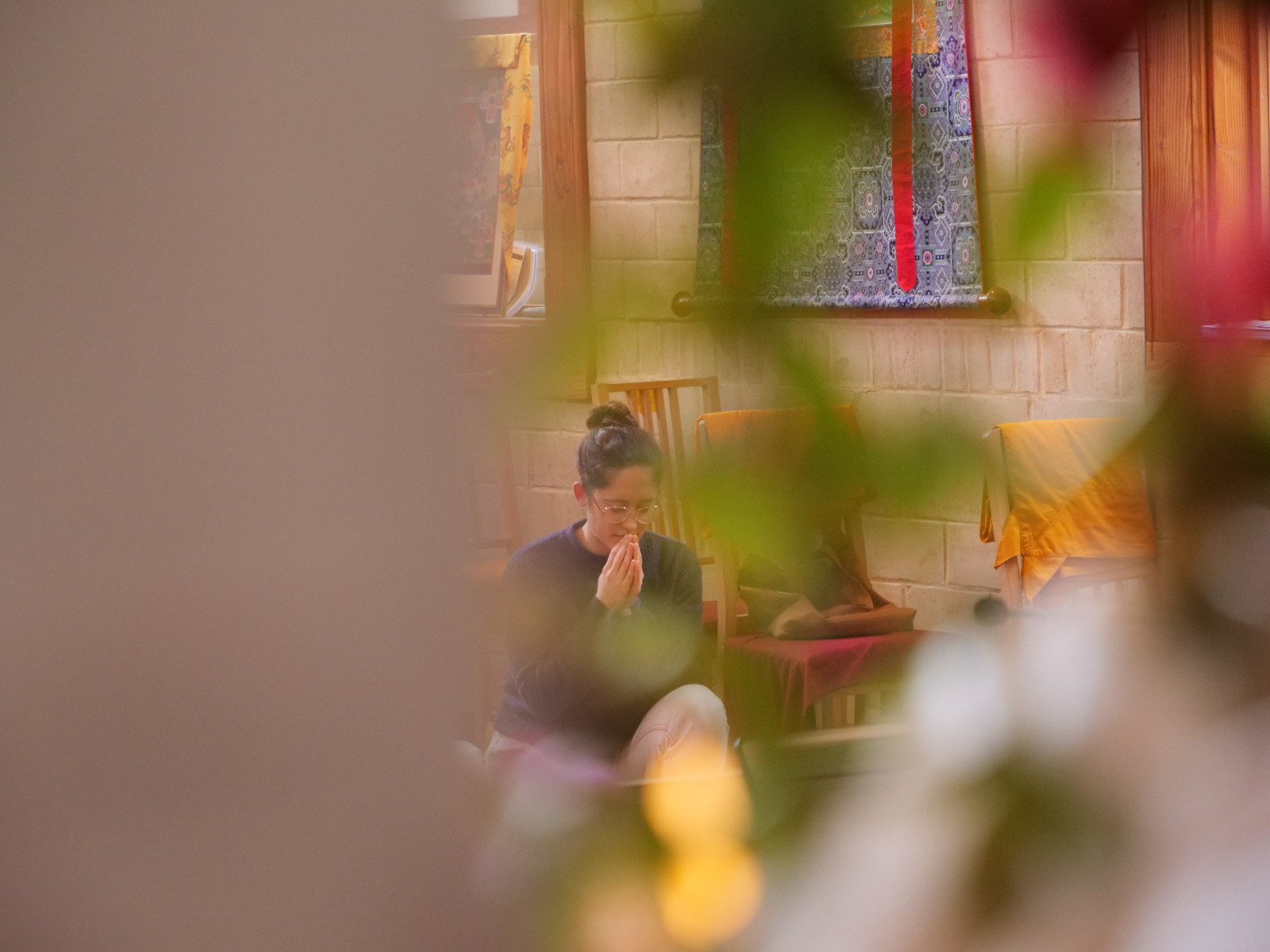
Photo: Capucine Griot, shot by Paulin Parsy
I had a very busy schedule, with dozens of hours of philosophy, French literature, foreign languages, film theory, and not to forget, Latin and ancient Greek civilization. My goal was to work in cinema - ideally becoming the best director alive, or the second-best if I got unlucky. It was two intense years during which I learned more than I could have in any other graduate program.
I had brilliant and passionate teachers. They could discuss Descartes or Nietzsche for hours, bring ancient Greek civilization to life, catalog obscure Czech 1941 to 1942 films about workers' conditions.
But slowly, something began to feel off. Every day, I could see in my teachers something that ended up deeply troubling me: the great gap between their intellectual knowledge on one side and kindness and personal happiness on the other.
My teachers were brilliant and incredibly knowledgeable - and yet, most were also harsh, mean, haughty and remote. They seemed to live in a world of beauty and ideas completely disconnected from what was happening outside their bubble. And, even more disturbingly, most of them seemed deeply, utterly unhappy with their lives. It was almost like they knew a lot, but not of the right kind of stuff.

As a 17-year-old drawn to social engagement and protests, and trying to figure out my way through life, I found this deeply confusing. I loved literature and movies - but if knowledge and sophistication made you this unhappy and out of touch with reality, what was the point?
By the time I finished the program, I was struggling with mental health issues and a sense that life had no deeper purpose. I was still aiming at a cinema career, hoping vaguely that professional success would provide meaning and answer the big questions. I was in my early twenties, and it was the lowest point in my life. I felt that happiness was something eluding me, and that there was no clear path towards a good life.
I was convinced by then - as I still am - that life has no inherent meaning nor value. No one brought us there, and there’s nowhere we’re going. But instead of bringing me peace, this consideration left me hollow.
How could simply existing be enough when there's so much suffering everywhere? What could possibly matter?
Then one night, trying to fall asleep, something clicked. I realized two things:
It was simple, perhaps naive, but it was sincere. What we all want, fundamentally, is to feel good. And because I'm not more important than anyone else, it made sense to include others in that quest for happiness.
I had found something close to being my north star: focus on what really matters - my own and others' happiness - and let go of what doesn't serve that purpose. Professional success or intellectual knowledge can be tools for that goal, but can’t bring deep satisfaction just by themselves.
Yet knowing what mattered, happiness, didn't provide a clear map of how to get there. I still felt lost, still struggled with my mental health, still had no clue how to access genuine happiness - mine or anyone else's.
A clearer map towards a meaningful life would come from two unexpected places: an ancient contemplative tradition, and a modern social and philosophical movement. Both are built on the same foundation: altruism and compassion.
At 21, I read The Monk and the Philosopher by Matthieu Ricard and his father, Jean-François Revel.
It was a nuclear bomb.
Ricard described how during his youth, he met brilliant, successful people who yet all seemed miserable - exactly what I'd witnessed in my teachers. As he dialogued with his father, I recognized all the philosophical ideas I'd studied, but saw how Ricard answered them with a completely different approach. I felt immediately drawn to Buddhism's practical simplicity, its emphasis on ethics and kindness, the calm that radiated even through written words.
I began formal study at a Tibetan Buddhist center, spending the next two years learning how to untangle what was going on in my mind.
Buddhism gave me the framework I'd been searching for to make sense of what was going on. It taught me that all sentient beings share the wish to be happy and not to suffer. Suffering comes from how we grasp things as being unchanging and clearly distinct from each other, when they're actually constantly transforming and fundamentally interconnected. At Buddhism's heart is compassion - the wish for ourselves and others not to suffer - and the wisdom to see things as they truly are. It is a slow, steady path towards getting rid of our mental illusions that cause all our suffering.
I'm not liberated from suffering. But I can say from personal experience that this stuff works. Little by little, working with my own mind and bringing more and more compassion in my daily life, I’m becoming a gentler and happier person. When I feel overwhelmed by everything going on inside and outside of me, this is what I go back to: "I'm doing this to bring more happiness to this world - for myself and others."
I spent my two first years of Buddhism focusing exclusively on my inner life, taking care of my most salient problems. However, once my mental health started getting better and I had a bit more mental space, I felt troubled again. The world kept spinning around me with its lot of suffering, and it didn’t feel like I was doing much to improve it outside of being comfortably at home, meditating on a cushion. Buddhism's path seemed to be: "Become enlightened first; then help others to work on their own mind."
Is personal, inner transformation really enough when so much urgent suffering demands action now?
A couple of years after reading The Monk and the Philosopher, I was discussing Buddhism and compassion with a friend and he told me I should check out effective altruism. I remember jotting the words down in my phone notepad, not knowing then how much it would transform my life - not like the Buddhist nuclear bomb, but more as a slow burn.
Effective altruism is a philosophical and social movement that started in the 2010s, asking: What does it mean to do good, and how can we do it as well as possible? Like Buddhism, it cares deeply about reducing suffering. But it brings a very different flavor to it, focusing on strategic thinking, rigorous analysis, and a focus on the most pressing problems.
I started by watching a couple of talks - and it didn’t click immediately. By then, I felt I already had a framework for thinking about suffering. Effective altruists typically focus on health and poverty, farmed animal welfare, and avoiding catastrophic technological risks. But if inner transformation was what truly mattered, working on these external problems seemed like a waste of time.
At the same time, I felt fascinated. Without any religious background or ideas, these people were deeply serious about doing good - taking the time to think rigorously about problems in the world and how to solve them, spending hours discussing the welfare of animals most people never think about, ready to drop what they’ve invested years of their life in if it doesn’t seem to be the best way to help. The more I learnt about it, the more I felt a curious mix of irritation, respect, gratitude and intrigue - something that I believe is quite common for people who encounter effective altruism.
Little by little, my initial doubts found answers. Cause prioritization, at the heart of the effective altruism movement, felt shocking at first - how could one make deliberate choices between helping different types of people? Who are we to decide who suffers most? But I came to believe that not prioritizing is already an implicit choice: the choice not to make the most difference you can. Measuring your final impact, like how many people are actually helped, is not a cold, heartless approach, but enables us to make sure we actually achieve what matters most.
What especially struck me, and still impresses me today, is the people who constitute effective altruism. These are people taking risks with their career, donating huge amounts of money, blood and kidneys, taking at heart the mission of making the world a better place for sentient beings - simply because they are genuinely interested in helping others in the best way possible.
Effective altruism transformed how I thought about compassion. I think compassion is one key to a happy life, but a key that needs to be lived and acted on. Compassion without strategy can mean well while changing little, and some problems are genuinely urgent. What we do to farmed animals is horrific, and it's happening now. Meditation alone won't stop it, and effective altruism is probably where the best tools to help can be found today.
Today, I still believe that inner work is a key for a happy human life, and that one should strive to develop a compassionate, wise mind to find true happiness.
I also believe that many humans and animals on this planet don’t have this opportunity. At the time I write this, extreme poverty is on the rise after decades of falling, and we never had as many farmed animals. It’s sometimes hard not to feel desperate - but I don’t have this luxury, and I trust we have good ways to move forward.
Something I’ve learnt from my teachers of Buddhism is that compassion and wisdom are things that need to be practiced in the real world. You engage in this inner work by being in contact with others, by relying on a supportive community, by developing a strong and supportive ethics, and a good heart that wants to take care of others.
Buddhism provides my foundation - the deep understanding of what suffering is and why compassion matters. It's taught me to cultivate genuine care for all beings and to see through the mental habits that create unhappiness. This internal work is essential and irreplaceable.
But compassion can't stay internal. Effective altruism showed me how to translate that care into effective action in the real world. It gives me the tools to think rigorously about urgent problems - to ask who suffers most, what actually helps, and how I can use my abilities responsibly. Effective altruism actually deepened my compassion by forcing me to confront what it really means to care about impact.

I haven’t fully resolved the tension between Buddhism and effective altruism. Juggling between the two movements and their own set of priorities is a constant recalibration: where should I focus most of my time? Should I use my holiday for a meditation retreat, or should I travel for an effective altruism conference to learn about the latest organizations in the movement?
However, I’ve come to find this tension not so paralyzing, but energizing. I love having different ways to engage in the world, and together, Buddhism and effective altruism offer what's closest to a good life for me. Buddhism shapes my long-term priorities and gives me the mental clarity needed for action; effective altruism provides strategy, methodology, community and a way to respond to urgent suffering.
I will continue to change my mind, even maybe on the things that seem the most important to me today. However, this is what I believe for now:
Compassion is one of the best tools I've found for happiness. Focusing on reducing suffering - mine and others' - gives my life a profound joy that professional success or intellectual knowledge never did.
Inner work is essential. Working with my own mind, cultivating wisdom and compassion, is the best gift I can make to myself and those around me. This is a continuous work that requires time and space.
But it's not enough to just work on oneself. There's too much urgent suffering in the world. We need frameworks to think rigorously about what actually helps in the short run and how to have greater positive impact, and we need the ambition to aim for what is the best for the world.
Whether I'm meditating on a cushion or filling out a spreadsheet, attending a Buddhist teaching or an effective altruism conference, in the end it all comes down to the same thing: taking care of sentient beings.
Buddhism taught me why to care. Effective altruism taught me how to care effectively, and to aim higher. Together, they're the closest thing I've found to an answer to that question I had at 17: what is a happy life, and how do we live it?