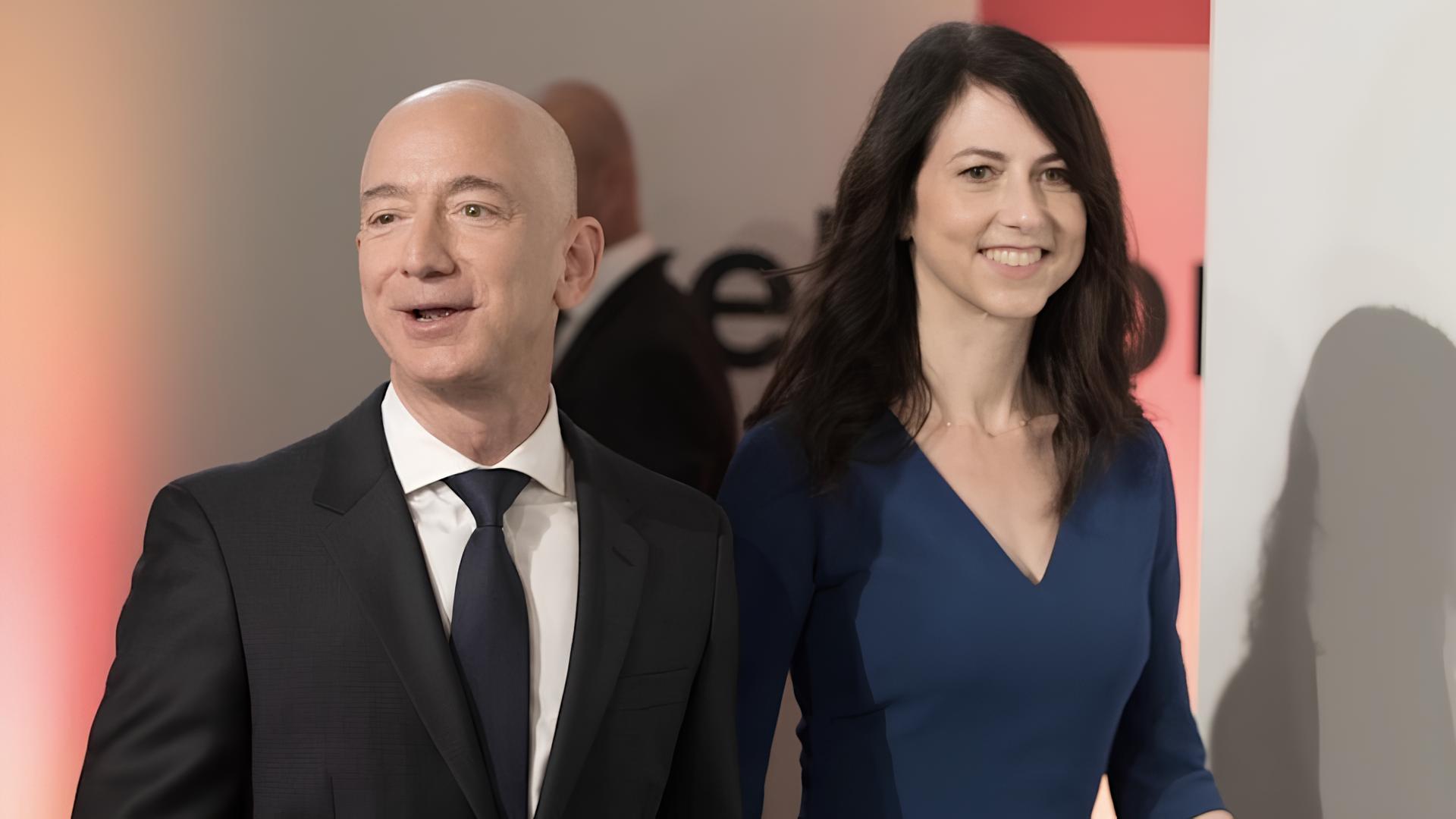
Nearly $38 billion transferred to Scott, marking one of the largest divorce settlements in modern history. Bezos retained roughly three-quarters of their Amazon holdings and, with them, his proximity to the summit of global wealth rankings. At the time, the story appeared straightforward. A separation of assets, a reordering of fortunes, a familiar script of billionaire life rearranged. The years since proved far more revealing, illuminating two radically different philosophies of wealth. In this case, divorce did not simply divide money. It divided worldviews.
The Redistribution of Power
MacKenzie Scott never set out to become a public figure of influence. To this day, she avoids interviews, rarely appears at industry events, and maintains a reputation for deliberate privacy. Yet since 2019, she has unmistakably become one of the most consequential philanthropists of the modern era, known above all for the extraordinary scale and speed of her giving. Since the settlement, Scott has donated tens of billions of dollars, distributing funds to thousands of organizations across education, public health, racial equity and community development. According to multiple analyses and philanthropic trackers, her giving has been marked by an unusual degree of trust, with unrestricted donations delivered rapidly, often without lengthy application processes or public ceremony. The approach has been described by nonprofit leaders as transformative as much for the autonomy it grants recipients as for the amounts involved.
In 2025 alone, Scott directed nearly $300 million toward historically Black colleges and universities—among them Howard University, Morgan State, Spelman College, Virginia State, Alcorn State and the United Negro College Fund—strengthening endowments and reinforcing long-term institutional stability over short-term initiatives. For institutions historically underfunded despite their outsized cultural and intellectual impact, the largely unrestricted gifts arrived as something closer to institutional accelerants. Across the United States, recipient organizations described something rarely seen at this scale. Money that came without conditions, naming rights or governance strings attached.
In doing so, her model has redefined the terms of American giving. Recent philanthropic rankings also show women increasingly dominating the list of top donors by proportion of wealth given away, a pattern reflecting differences in financial strategy as much as in underlying philosophy. Scott has publicly committed to distributing the majority of her fortune within her lifetime, and with more than $26 billion already donated in just seven years, she now ranks behind only Warren Buffett and Bill Gates in terms of lifetime charitable giving. Yet the challenge she faces is a paradox of modern wealth. Amazon's continued growth means her fortune replenishes faster than she gives it away. Wealth, in Scott's view, is a resource to be circulated—even as the market keeps rebuilding what she gives away.
The contrast with traditional philanthropic structures is striking. Rather than building a legacy institution that will distribute funds indefinitely, Scott appears intent on dissolving her fortune into the present. The result resembles a redistribution engine more than a foundation. One that moves quickly and, by design, discreetly.
The Architecture of Accumulation
Jeff Bezos, meanwhile, has continued along a trajectory centered on expansion and accumulation. Since stepping down as Amazon’s CEO in 2021, he has devoted increasing attention to a portfolio of ventures that extend across media, aerospace, luxury real estate and philanthropy. His net worth, tied largely to Amazon’s market performance, continues to fluctuate but remains among the highest in the world; in early 2026 he once again ranked among the top three richest individuals globally as Amazon’s valuation rebounded.
Bezos’ philanthropic strategy differs markedly from Scott’s. Through initiatives such as the Bezos Earth Fund and the Day One Fund, he has committed billions toward climate research, early childhood education and homelessness. Yet these commitments, while substantial, remain modest relative to his total fortune. Much of his capital continues to be reinvested into ventures designed to generate future returns, from Blue Origin, his space venture which after years of delays has finally begun delivering results, though it remains a distant second to SpaceX, to The Washington Post, a media institution he acquired in 2013 and whose editorial direction and financial health have since become subjects of considerable public debate. In recent years, Bezos has also embraced a more visibly public lifestyle. High-profile real estate acquisitions, large-scale events and a widely publicized relationship with media personality Lauren Sánchez have kept him firmly within the cultural spotlight.
None of this is inherently contradictory. Bezos has never positioned himself as a rapid-distribution philanthropist. His approach reflects a belief in building companies, technologies, institutions that compound influence over time. Wealth, in his approach, is not something to dissolve quickly but to deploy strategically, often with an eye toward future infrastructure and an emphasis on long-term structural impact over short-term response.
Two Models of Modern Power
What makes the post-divorce trajectories of Scott and Bezos so compelling is not simply the scale of their fortunes, but the clarity of their divergence. Both possess resources capable of reshaping the world. Both operate within the same economic ecosystem that produced their wealth. Yet their choices illuminate two distinct interpretations of what wealth is for. Scott’s model treats capital as a temporary stewardship. Money, in this view, achieves its highest utility when placed directly into the hands of those positioned to deploy it for social impact. Speed and trust are central. The emphasis lies on redistribution and immediacy, on addressing present inequities rather than constructing long-term personal legacy. Bezos’ model reflects a more traditional architecture of accumulation and strategic investment. Wealth is preserved and expanded, then directed toward large-scale initiatives such as space exploration, media influence and climate technology that operate on extended timelines. Visibility and ambition are not incidental but integral to the narrative of progress.
Neither approach is neutral. Each shapes public perception of what it means to be wealthy in the twenty-first century. One positions wealth as something to be relinquished in service of systemic repair. The other positions it as a tool for building new systems altogether.
The Cultural Meaning of Wealth Now
Their divergence comes at a moment when the cultural meaning of wealth is undergoing reassessment. Younger generations increasingly view extreme accumulation with skepticism, questioning not only how fortunes are made but how they are used. Philanthropy itself is evolving from a reputational tool to a measure of ethical responsibility. The conversation has moved from how much one has to what one does with it. Within this context, MacKenzie Scott and Jeff Bezos have become archetypes as much as individuals. One embodies the rapid redistribution of private capital into public good. The other represents the continued expansion of private influence across industries and frontiers. Both approaches shape the future, but in profoundly different ways.
What remains clear is that wealth, once primarily a symbol of personal success, has become a marker of moral and cultural positioning. The question is no longer simply who has the most, but who does the most with what they have, and to what end. In the years following their separation, Scott and Bezos have offered two answers to that question. And in that divergence lies one of the most revealing portraits of modern wealth. Not just how fortunes are built, but how they are ultimately understood.


.png)