Every four years, a city reveals where its power is gathering. There is an inauguration, a public oath, a speech delivered with the measured confidence of someone stepping into office.
by
Elena Didrigkeit
The Democratic New York mayoral candidate Zohran Mamdani and his wife Rama Duwaji cast their ballots in the parliamentary elections at Frank Sinatra High School on November 4, 2025, in New York City. Source: Shutterstock.
New York knows these scenes well. It is fluent in ceremony, adept at converting authority into image. The moments are meticulously staged, designed for broadcast. Leadership announces itself with clarity, confidence, and volume.
And yet, if you look slightly beyond the frame, another story is usually unfolding.
Beyond the Podium
In recent months, as conversations around New York’s political future have intensified, my attention has been drawn less to the stage than to the figures standing nearby, pointing toward a deeper transformation already underway. One of those figures is Rama Duwaji.
She is young enough to be assumed fluent in the social landscapes of her generation, a world organized around polished places and a small, luminous class of young models and singers. Instead, she moves differently, with deliberation, with an almost studied resistance to playing a role. Duwaji is an illustrator by training, a visual thinker whose work is guided more by story and inner life than by outward effect. She is also the wife of Zohran Mamdani, a New York State Assembly member whose political rise has been rooted in housing advocacy, labor rights, and an unusual fluency in speaking to communities long overlooked by institutional power.
Their partnership began long before the glare of public attention. They met in New York in their twenties, drawn together by shared values, curiosity, and a seriousness about the world they hoped to inhabit. They married young, aligned in temperament as much as in conviction. Friends describe their relationship as collaborative—sustained by conversation, mutual regard, and a sense of purpose that seemed, even then, notably settled.
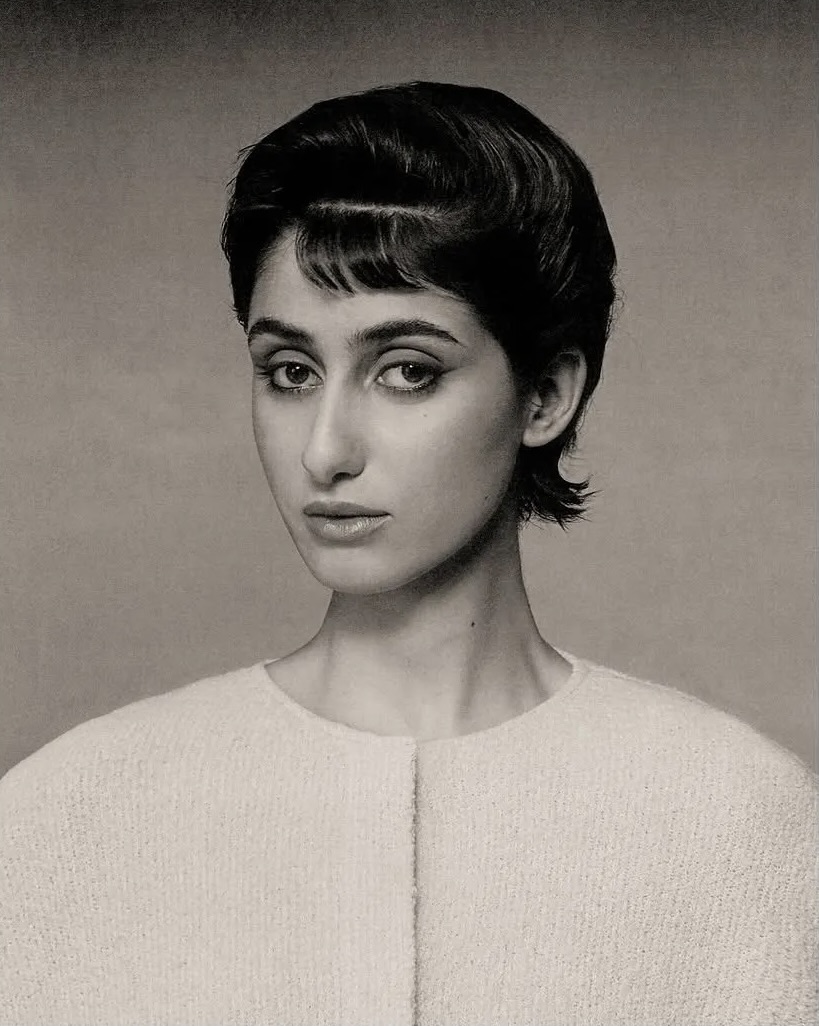
Ram Duwaji, photographed by Szilveszter Makó for The Cut
Rama Duwaji has never positioned herself as a public figure in her own right. She does not orbit her husband’s career; she maintains her own interior life, her own work, her own pace. The steadiness of this arrangement is part of her presence.
The Language of Formation
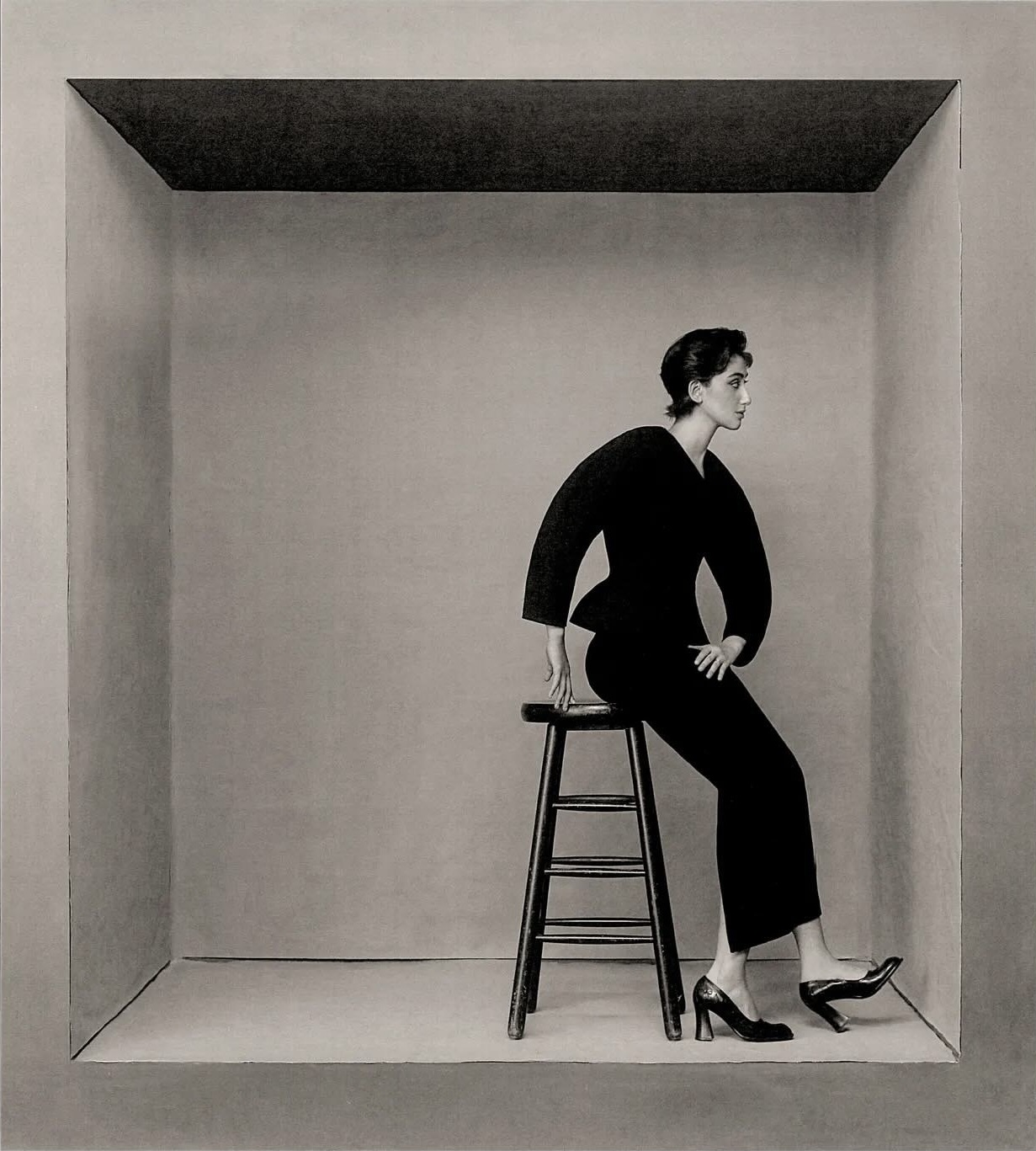
That quality became widely visible after her portrait for The Cut, photographed by Szilveszter Makó. The image makes no attempt to refine her face into symmetry or to soften her features to meet a familiar ideal. She appears as herself: angular, Eastern, magnetic, uncorrected. The image is striking in the way it treats attention as a given.
Rama Duwaji, photographed by Szilveszter Makó for The Cut
I found myself returning to the image long after I first encountered it. It unsettled something habitual—the familiar inventory of what might be adjusted, minimized, perfected. The nose. The lips. The body. The cycle loosened.
Over time, my attention moved from the architecture of my face to the architecture of my inner life. I began to wonder how I spoke in rooms that mattered, how conversations unfolded around me, whether my presence opened a space or narrowed it. The image gestures toward a language of formation, far removed from beauty understood as consumption.
Authority That Is Grown, Not Borrowed
What Rama Duwaji represents—perhaps without intending to—is a reorientation of aspiration. Away from flawlessness, toward integrity. Away from surface confidence, toward cultivated depth. She offers no aesthetic to copy, only a posture to develop. For young women, in particular, the distinction is consequential: not another ideal to pursue, but permission to measure worth on one’s own terms.
I recognize my own longing in this. A wish to become intellectually compelling in my own right; to suggest, especially to younger women, that ambition need not harden into severity, and that strength does not require the erasure of femininity. That it is possible to build a life deliberately, even as expectations press loudly from every side—even when one does not resemble the ideals most readily rewarded.
Rama Duwaji, photographed by Szilveszter Makó for The Cut
New York has always favored those who know how to be seen. And yet, attentive observers can sense a shift in what the city responds to. There is a growing regard for people who do not push themselves forward, who feel no urgency to announce their importance, but whose presence registers as settled and real. For women especially, the fascination appears to be moving away from polish and toward something rarer: a confidence and authority that develop inwardly.
Rama Duwaji does not present herself as a role model. She simply inhabits her own universe, which may be precisely why she has come to feel instructive.
Perhaps this is the more enduring lesson of the moment: that becoming is a practice—one that unfolds in how we think, how we speak, how we move through the world, and in the daily decisions about who we are willing to become.