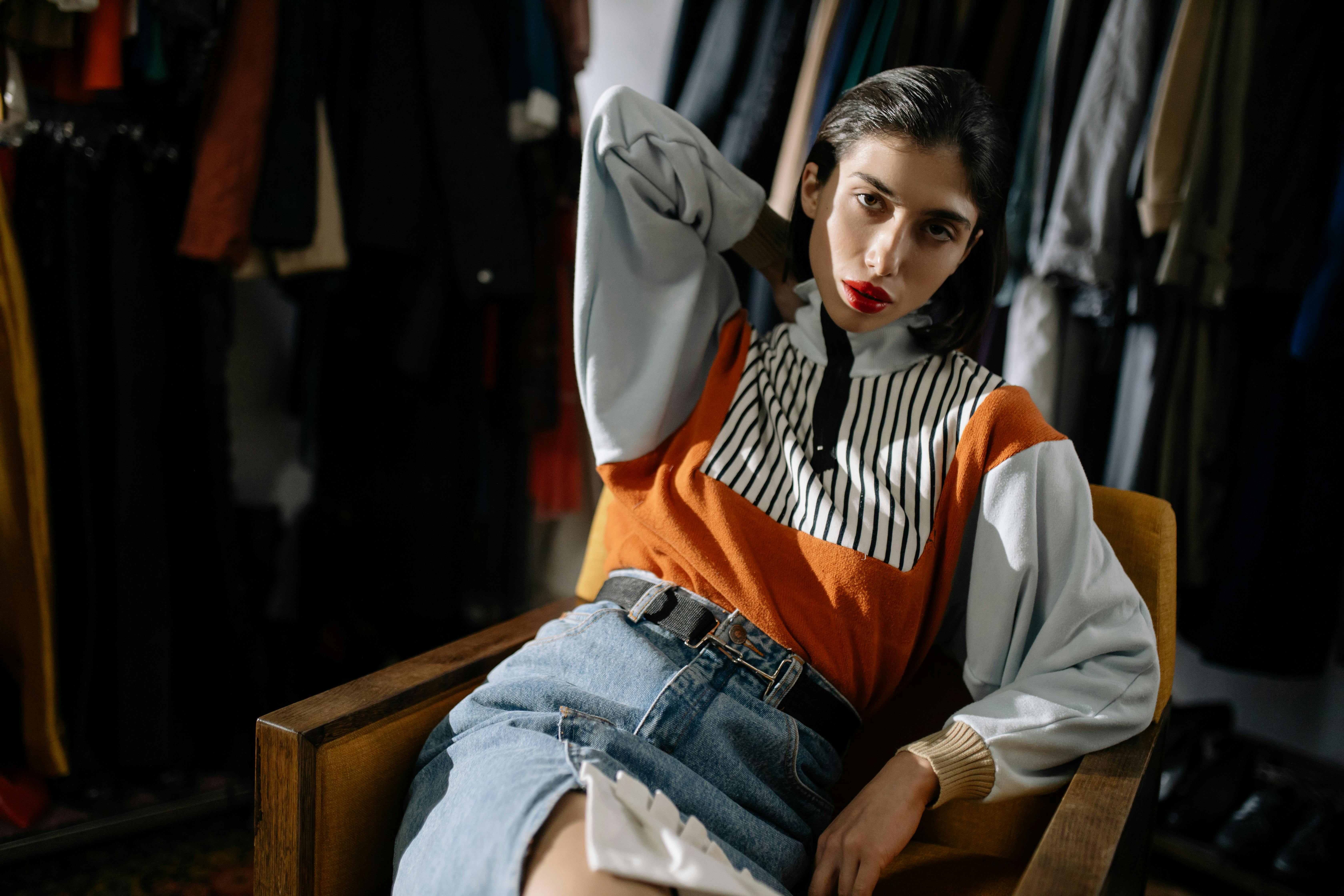
This is not that list. What Millennials and Gen Z are reaching for is something more considered: pieces that last, objects that carry history, things that were made well enough to be worth owning at all. The wishlist has a longer shelf life now. Here is what that looks like.
The explanation is partly generational. According to Vogue, 13 of the 19 major creative director appointments in 2025 went to Millennial designers. Even older designers, like Gen X-cusper Marc Jacobs, are referencing the era. The people now shaping fashion are the ones who grew up in the 2010s—and at the Fall 2026 New York Fashion Week runways, that influence was impossible to miss. Coach, Khaite, Proenza Schouler, and Marc Jacobs all referenced the era, not as imitation but as a starting point. The result is a market where the original pieces from that decade—and the houses that defined it—carry a weight that newer alternatives simply cannot replicate.
For Her
Vintage Chanel Sunglasses
The case for vintage Chanel is not nostalgia. It is material honesty. The frames produced in earlier decades are heavier, the acetate denser, the construction less compromised by quarterly margin targets. They carry a kind of authority that new pieces spend years trying to approximate, and most never quite reach. Buying vintage also resolves the ethical question cleanly: nothing new was manufactured, nothing was shipped, and the object will almost certainly outlast whoever is wearing it.
Alohas Leather Ballet Flats
What makes the Alohas ballet flat worth paying attention to is not the shoe itself but the model behind it. Alohas produces on demand, which means nothing is made until someone orders it. No overproduction, no sale rail at the end of the season, no warehouse full of unwanted inventory. The leather version develops character with wear rather than deteriorating, and it moves between a satin slip skirt and tailored trousers without missing a beat.
Vintage Gucci Bag, Blue Leather with Monogram
The vintage Gucci bag in blue leather with GG monogram is the kind of object that rewards patience. It does not turn up easily, and that scarcity is part of what makes it worth wanting. A generation that has grown up with instant access to almost everything is increasingly drawn to things that require some effort to find—and heritage pieces in distinctive colourways hold their value in ways that contemporary fast-luxury almost never does.
Loewe Flamenco Bag in Nubuck
The Loewe Flamenco has held its place in the most considered wardrobes for over a decade, which is itself a significant achievement in a market designed around planned obsolescence. The nubuck version—soft, unstructured, with the signature knot drawstrings—is the 2026 iteration most worth attention. It functions as a clutch, a shoulder bag, or a crossbody without losing anything in translation, and Loewe’s leathercraft, rooted in a Spanish tradition dating to 1846, remains genuinely difficult to match.
Rat & Boa Pamela Slip Skirt
The Rat & Boa Pamela Slip Skirt keeps appearing in the wardrobes of people with genuine taste because it keeps working. Bias-cut satin, floor-length, designed to move with the body rather than constrain it—it reads as effortful without requiring any particular effort to wear. Rat & Boa produces in limited runs, and when a piece sells out, it does not return. For buyers who have grown tired of the abundance model, that kind of scarcity feels less like a limitation than a guarantee.
Bulgari Serpenti
Bulgari’s Serpenti has stayed relevant through every decade since its introduction because the design is genuinely singular. The snake coils around the wrist using the Tubogas technique—flexible gold formed without soldering—making it as much a feat of engineering as a piece of jewellery. For a generation skeptical of luxury that announces itself through logos, the Serpenti is exactly the right answer: unmistakable to those who know it, invisible to those who do not.
For Him
Gucci Double-Pleat Trousers
The trouser silhouette has loosened decisively, and Gucci is among the clearest expressions of where it is going. The double-pleat wool cut—pressed crease, fluid drape, designed for movement rather than restriction—occupies the rare territory between formal and relaxed without belonging fully to either. It works in a creative office and carries through to dinner without the mid-afternoon change of clothes that lesser trousers require.
Saint Laurent Le Loafer
The Saint Laurent Le Loafer has become the shoe that stylists, editors, and Millennials with considered taste reach for when everything else feels like too much of a statement. It is polished without being stiff, versatile without being anonymous. The 2026 backless version adds one more reason to want it, extending the shoe’s range into warmer months without compromising the silhouette that made it worth wanting in the first place.
A Cartier Santos Watch
The Cartier Santos Watch is one of the few watches whose history is worth knowing: designed in 1904 for aviator Alberto Santos-Dumont, who needed a watch he could read without taking his hands off the controls, it became the first purpose-built wristwatch. More than a century later, it remains in continuous production—stainless steel and yellow gold, interchangeable straps, built to a standard that most contemporary watchmaking has stopped trying to reach.
Alighieri Dante Ring
London brand Alighieri makes jewellery inspired by Dante’s Divine Comedy, each piece hand-cast in the heart of Hatton Garden using the ancient lost-wax technique. The Dante ring, in 24-karat gold-plated bronze, has the worn, fragmentary quality of something recovered from another century rather than produced in this one. For buyers who value craft, provenance, and the story an object carries before it ever reaches them, Alighieri is consistently the right answer.
“48% of Gen Z luxury buyers prioritize self-expression over brand recognition.”—Bain & Company, 2024
What This List Is Really About
Every piece on this list shares one quality: none of them are designed to be replaced. Millennials and Gen Z are not rejecting luxury. They are redefining what makes something worth owning.
The question is no longer whether a piece carries a recognizable name, but whether it was made well enough to last, sourced transparently enough to trust, and specific enough to feel like a genuine choice rather than a reflex.
The logo is no longer the point. The object is.
And the brands that understand that distinction are the ones that will still be on wishlists ten years from now.