The Sardine Moment
Why the most unglamorous fish in the tin is having the most beautiful season of its life—and what it tells us about the world we are becoming.
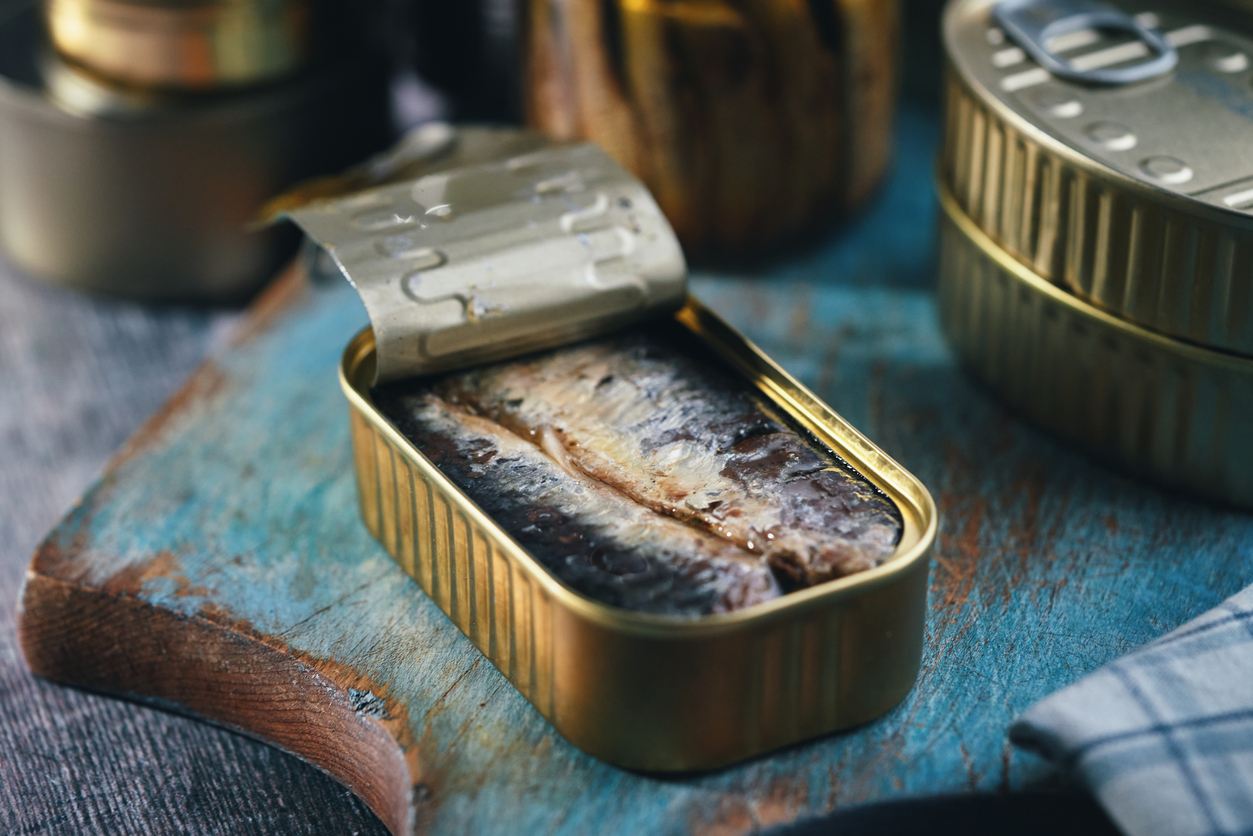
Photo: GMVozd / iStock
Nobody planned the sardine revival. What happened instead was stranger and, in its way, more interesting: a young woman posted a video of herself opening a tin of sardines, arranging them on a plate with some crackers, halving a lemon, scattering a few capers, drizzling the oil from the tin over everything, and eating, slowly, at her kitchen counter. The clip was forty seconds long. It has been viewed many millions of times.
This requires some explanation, though perhaps less than you might think. The sardine moment arrived from somewhere very specific: from a generation that has spent a decade being sold complicated answers to simple problems, and has begun, with a certain exhaustion it can no longer pretend is temporary, to look for the door marked enough.
The twelve-step skincare routine, the adaptogen latte, the supplement stack with the unpronounceable ingredients and the eighty-dollar price tag. At some point, without anyone declaring it officially, a critical mass of people looked at all of it and decided that enough, actually, might be enough. The sardine, unglamorous and ancient and embarrassingly cheap and nutritionally almost without peer, was waiting for them when they arrived.
Trends, as a rule, tell you something about the anxieties of the people who adopt them. The sardine tells you that a great many people have simply grown tired of being sold things they do not need, and are looking, with an urgency that feels almost personal, for something that works without requiring an explanation.
"You wanna glow up this year, but you're not eating sardines — what are you doing?"
The content creator Ally Renne said something close to this while holding an open tin of sardines in olive oil, and the clip found its audience, because it was accurate. It named something people were already quietly feeling: that the most powerful things are sometimes the self-conscious ones, and that the answer to the question of radiant skin and genuine nourishment and a meal worth eating had been sitting in a pantry tin the whole time, patiently waiting for everyone to stop looking elsewhere.
The science behind the sardine’s skin moment is worth taking seriously, because it is considerably more interesting than the social media version suggests and considerably more solid than the backlash would have you believe. Sardines are among the most concentrated sources of EPA and DHA omega-3 fatty acids available in the human diet, and the biology here is genuinely remarkable. These long-chain fatty acids are structural components of every cell membrane in the body. They are not a supplement. They are, in a meaningful sense, the material from which you are made.
At the most fundamental level, omega-3s reduce systemic inflammation, the low-grade chronic kind that underlies everything from acne and rosacea to accelerated cellular ageing, and that most people carry without knowing it. They also support the integrity of the skin barrier, the fine and largely invisible protective layer that determines how much moisture the skin holds and how well it resists the considerable hostility of the outside world. When that barrier is compromised, it becomes the unacknowledged driver behind most chronic skin complaints. When it is well-supported, it is the foundation of what we recognise, without always being able to explain, as healthy skin: the kind that looks as though its owner sleeps enough and worries little. Dr. William Li, the physician and researcher whose work on food as medicine has shaped a generation of thinking in nutritional science, has observed that the omega-3 content in sardines represents one of the most potent anti-inflammatory dietary interventions available. He is not talking about a trend, but about cellular biology.
What the more careful voices in dermatology are quick to add, and what the more honest corners of this trend already acknowledge, is that no single food remakes a face in a fortnight, and that the skin’s response to nutrition is measured in months rather than mornings. The registered dietitian Amy Goodson has written that the body’s largest organ answers to many nutrients at once: vitamin C for collagen synthesis, zinc for wound healing and the regulation of acne, omega-3s for barrier integrity and the dampening of inflammation. What sardines offer within this concert is not a shortcut. They are simply an unusually efficient contribution to a process that has always required patience, and has always been worth it.
And yet the full nutritional picture is worth pausing on, because it is genuinely startling. One tin of quality sardines in olive oil delivers not only those omega-3 fatty acids but complete protein, calcium (the soft, edible bones are among the richest non-dairy sources available anywhere in the food supply), selenium, iron, and a B-vitamin profile that touches everything from energy metabolism to neurological function. Very few foods do this much, across this many dimensions, with this little effort and at this price. The sardine’s long wait for cultural recognition is, in retrospect, one of the stranger oversights of the modern diet.
But the sardine is not, finally, about omega-3s. To reduce it to skincare would be to miss the more interesting argument it is quietly making. What the sardine represents, as a cultural gesture, is a choice, and the choice itself is the point. In a moment when the world feels increasingly expensive, complicated, and loud, an entire generation is reaching for the unglamorous answer. The tin. The pantry staple. The thing their grandparents kept on the shelf without irony, without a content strategy, without any particular sense that they were doing something worth filming.
It is the same instinct that produced the quiet luxury movement in fashion, the return to natural fermentation in food, the growing appetite for objects and practices that carry genuine provenance rather than carefully constructed narrative. At its heart, it is a turn away from spectacle and toward substance, toward the things that were always good and did not need to be told so. It fits, with a kind of inevitable rightness, into the broader mood of the moment we find ourselves in: what we have been calling, in these pages, the interregnum, the time between orders, the period when the expensive and the performative begins to feel not just excessive but faintly embarrassing, and the essential begins to look, once again, not like a consolation prize but like the only prize that ever mattered.
The sardine is, among other things, a very small argument for sufficiency over excess—and the world is beginning to find that argument persuasive.
The market has not been slow to notice, and it is worth paying attention to what that means. Brands like Fishwife in the United States, José Gourmet from Portugal, and the century-old Pinhais, whose tins have developed a near-cult following among the more serious tinned fish enthusiasts, a group that turns out to be both larger and more opinionated than one might have expected, are now objects of genuine connoisseurship. Limited-edition tins are collected and reviewed with the vocabulary of fine wine. The question is no longer whether to eat sardines but which sardine, from which waters, packed in which oil, in which vintage. Prices have begun to rise quietly but measurably, and the premium tin that cost four euros in a Lisbon market two years ago is now approaching eight. This is, on one reading, a tribute to how far the sardine has travelled. On another, it is a warning. The sardine’s great virtue was never exclusivity. It was abundance, the deep and democratic abundance of a food that asked nothing of you except that you open the tin and pay attention. The moment it becomes a status object, it loses the argument it was making. Eat them freely, eat them often, and resist the temptation to turn them into anything more than what they are: one of the finest and most honest things you can put on a plate, at any price, in any season, without apology.
In Portugal and Spain, of course, no such rehabilitation was ever necessary. The sardine never left, and the idea that it required a TikTok moment to become respectable would be received there with polite bewilderment. In Lisbon, the June festival of Santo António fills the streets with smoke from grills loaded with fresh sardines, the smell of salt and char and warm stone carrying for blocks, the eating communal and unhurried and wholly without self-consciousness, the sardine serving its ancient function as a food that brings people together and asks nothing complicated of them in return. In the market towns of Galicia in northern Spain, tins of high-quality sardines are wrapped as gifts and aged for years, their flavour deepening and mellowing with time the way a good wine does, the tins turned annually like bottles in a cellar. The Anglo-American world has not discovered the sardine. It has, at last, arrived where the rest of the Mediterranean has always been.
The sardine rewards good ingredients and minimal intervention, which is either a convenience or a philosophy depending on your disposition, and possibly both. The recipes that follow are the ones we find ourselves returning to: the viral, the classic, the unexpectedly extraordinary, and the one that began as an experiment and never left. In every case, begin with the best tin you can find—Pinhais or Nuri for the purist, Fishwife for the modern pantry, José Gourmet when you want the tin itself to be beautiful. The oil is not a by-product. It is half the point.
This is the recipe that TikTok made famous, the one that introduced millions of people to the idea that a tin of sardines, properly arranged, could function as something close to a meal in itself, generous and varied and deeply satisfying, requiring almost nothing in the way of cooking. Its genius lies in contrast: the richness of the fish against the brightness of the acid, the crunch of the cracker against the silkiness of the oil, the brine of the caper against the sweetness of a cherry tomato.
SERVES 1, GENEROUSLY
— 1 quality tin of sardines in olive oil (Fishwife, Nuri, or José Gourmet)
— A handful of good crackers or thin-sliced toasted sourdough
— Cherry tomatoes, halved
— Cornichons or good-quality pickles
— 1 tablespoon capers, rinsed
— ½ a lemon
— A few olives
— Flaky sea salt, cracked black pepper
— Optional: thinly sliced red onion, a few drops of chili oil, a spoonful of labneh or crème fraîche
1. Open the tin and arrange the sardines on a plate without breaking them; they are the centrepiece, not a condiment.
2. Drizzle the oil from the tin over the fish and the crackers.
3. Arrange everything else around them: tomatoes, cornichons, capers, olives. Think of it as composing rather than cooking.
4. Finish with a generous squeeze of lemon, flaky salt, a few turns of pepper, and whatever additions feel right. Eat immediately, unhurriedly.
This is the toast that converts people who believe they do not like sardines. The combination of warm sourdough rubbed with garlic, a generous layer of cultured butter, the sardines whole and glistening, thinly shaved fennel for its anise freshness and crunch, and a final squeeze of lemon is a study in what happens when a few extraordinary ingredients are allowed simply to be themselves. It takes five minutes and tastes like the south of France.
SERVES 2
— 2 thick slices of sourdough, toasted deeply golden
— 1 clove of garlic, whole
— 2 tablespoons cultured butter (or good unsalted butter, generously applied)
— 1 tin of whole sardines in olive oil
— ½ a fennel bulb, shaved as thinly as possible on a mandoline or by hand
— Fennel fronds, roughly torn
— ½ a lemon
— A small handful of flat-leaf parsley, roughly chopped
— Flaky sea salt, plenty of black pepper
1. Toast the sourdough until it is properly golden—not pale, not burned, but deeply coloured and crunchy through. While still hot, rub the surface firmly with the cut side of the garlic clove.
2. Allow the toast to cool for thirty seconds, then spread it generously with the cultured butter. The contrast between the warm bread and the cold butter, melting into the surface, is part of the point.
3. Lay the sardines along the toast, keeping them whole if possible. The presentation matters here: these are not hidden ingredients.
4. Scatter the shaved fennel over the top, followed by the fennel fronds and the parsley. A squeeze of lemon. Flaky salt. Black pepper. Eat at once.
Pasta con le sarde is one of the great dishes of Calabrian cooking—a recipe born of poverty and Mediterranean abundance in equal measure, balancing the richness of the fish against the brightness of lemon, the brine of capers, and the extraordinary textural contribution of golden, garlicky toasted breadcrumbs, which perform here the function that cheese performs in other pasta dishes: richness without weight, crunch against silk. It is thirty minutes from tin to table and it is, in every important sense, a perfect meal.
SERVES 2
— 200g spaghetti or linguine
— 2 tins of sardines in olive oil — reserve the oil
— 3 large cloves of garlic, thinly sliced
— 1 teaspoon dried chili flakes (or to taste)
— 2 tablespoons capers, rinsed
— Zest of 1 large lemon (avoid the juice — it makes the pasta wet)
— A large handful of fresh flat-leaf parsley, roughly chopped
— 50g panko or coarse breadcrumbs
— Good extra-virgin olive oil
— Flaky sea salt and black pepper
1. Drain the sardine oil into a wide frying pan over medium heat. Add the breadcrumbs and toast, stirring constantly, until deeply golden and fragrant—about three minutes. Add half the garlic for the last minute. Tip into a bowl and set aside.
2. In the same pan, add a generous pour of olive oil and the remaining garlic. Cook gently until golden and fragrant. Add the chili flakes.
3. Add the sardines to the pan, breaking them into large pieces with a wooden spoon—not too small, you want texture. Add the capers. Cook for two minutes until everything is warmed through and the sardines have begun to colour slightly at the edges.
4. Cook the pasta in well-salted water until al dente. Reserve a generous cup of the cooking water before draining.
5. Add the drained pasta to the sardine pan with a few tablespoons of pasta water. Toss vigorously until the pasta is glossy and well-coated, adding more water as needed. Off the heat, add the lemon zest and half the parsley. Taste for salt.
6. Serve immediately, scattered generously with the golden breadcrumbs and the remaining parsley. A final drizzle of your best olive oil.
This is the recipe that began as an experiment and became a permanent fixture. It requires almost no cooking—only the quality of the tin, the brightness of preserved lemon, and the slow warmth of a good chili oil doing their work together. It is equally at home on crackers as part of a larger spread, spooned over steamed rice, or eaten directly from the bowl in the manner of a person who has stopped pretending that presentation is the point. It is the sardine at its most honest and most delicious.
SERVES 1–2
— 1 tin of best-quality sardines in olive oil
— 1 tablespoon preserved lemon, finely chopped (rind only)
— 1–2 teaspoons of a good chili oil—Lao Gan Ma, or a high-quality artisan version
— A small handful of fresh coriander or flat-leaf parsley
— 1 tablespoon thinly sliced spring onion
— A few drops of good soy sauce (optional, but extraordinary)
— Toasted sesame seeds to finish
— Crackers, rice, or sourdough to serve
1. Open the tin. Arrange the sardines in a shallow bowl, keeping the oil.
2. Scatter the preserved lemon, spring onion, and herbs over the top.
3. Spoon the chili oil over everything—be generous. Add the soy sauce if using.
4. Finish with sesame seeds and eat immediately, with whatever you have to hand for the eating. This is not a dish that waits.
Not all sardines are the same, and the distance between a mediocre tin and an excellent one is large enough to matter. The most important variable is the oil: sardines packed in extra-virgin olive oil are a fundamentally different thing from those packed in sunflower or vegetable oil, because the quality of the fat is part of what you are eating, and part of what is doing the work. For everyday use, Nuri is reliable and widely available. For a gift, or for a moment when you want to understand what the fuss is actually about, Pinhais from Portugal is the place to start—a tin that has been made the same way, in the same place, since 1911. Fishwife is the best entry point for anyone arriving at this world fresh. José Gourmet is for when the tin itself needs to be beautiful.
The sardine’s moment will not end when the algorithm moves on, because the sardine’s value has nothing to do with the algorithm. It was always this: one of the most nutritionally complete, environmentally responsible, and genuinely delicious foods available to the home cook at any price. The moment has not made it better. It has simply made it visible. And it is worth protecting that visibility from the thing that tends to follow it. Prices have already begun to climb. The premium tin that cost four euros in a Lisbon market two years ago is now approaching eight. The sardine, in other words, risks becoming precisely what it was supposed to resist: a packaged object, a signal of taste, a food that people buy to prove they are paying attention. Eat them before that happens, in abundance and without fuss, without a content strategy, without making them into anything other than what they already are. What the moment offers, finally, is not a discovery but a homecoming: to the obvious, the affordable, the thing that required no trend cycle to become true.
The sardine was always this good. We simply needed a reminder to believe it.